Interior visit
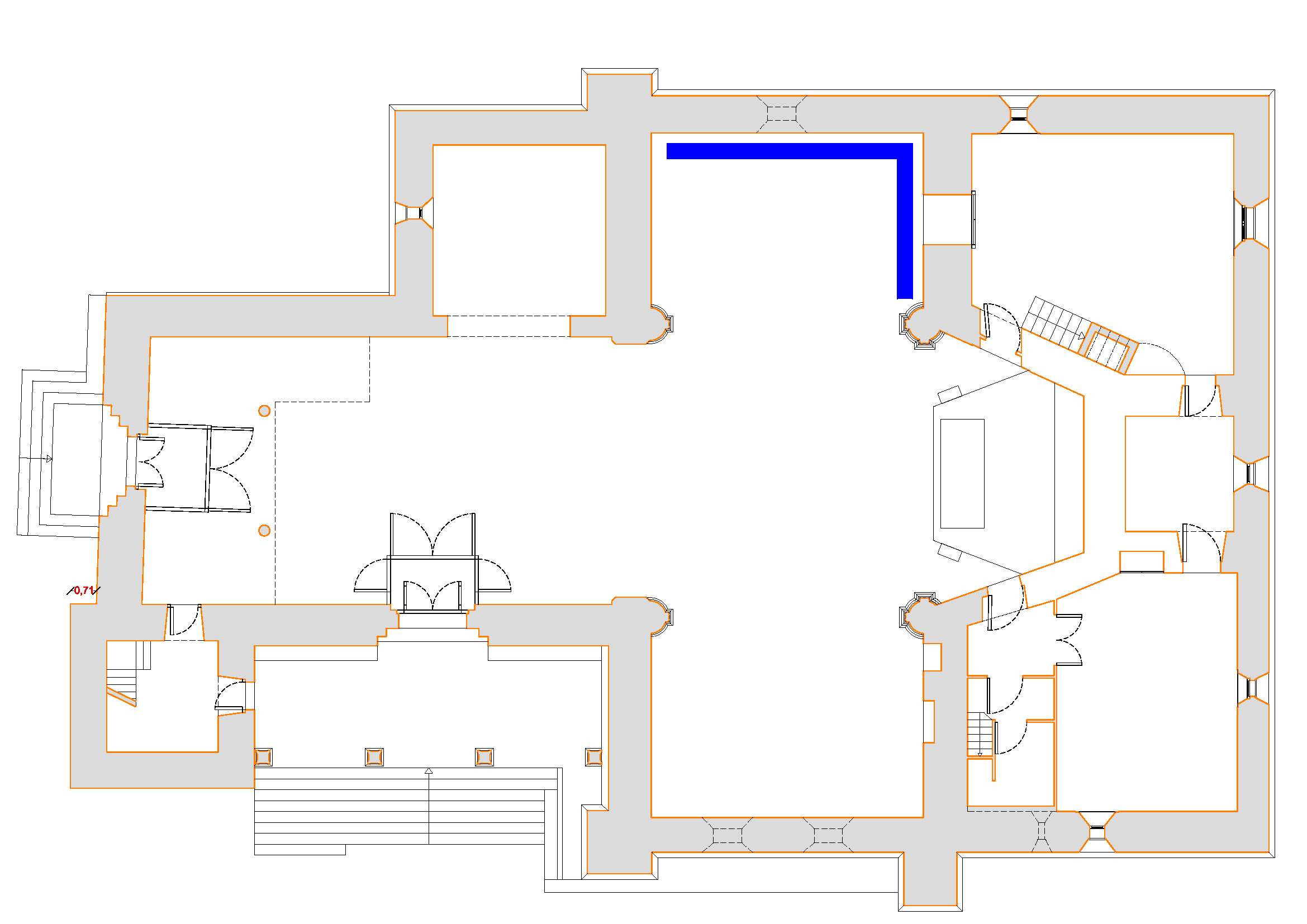
We proceed to the right side of the transept, also known as the gospel side, where two altarpieces are located. Notably, several significant works were carried out here in the year 1750.
Accounts of the work on the second sacristy and the chapel of Our Lady of the Rosary in this Parish of Our Lady of the Azogue of the town of Puebla de Sanabria; carried out last year, 1750; detailing the funds raised and spent for the building works; two thousand, four hundred and sixty-nine Reales and twenty-six maravedís. The expenses I, the said Don Agustín Belicia Valboa, incurred and paid for the construction of the said second sacristy or chapel of Our Lady of the Rosary amount to eight thousand seven hundred and twenty-two Reales and twenty-two maravedís[1].
[1] Puebla Libro de Fábrica 1 principia 1732 – 1790 termina. De la iglesia parroquial, Folios 109 al 109 vto. (Archivo Diocesano de Astorga)
2.7 Altarpiece, Our Lady of Victories
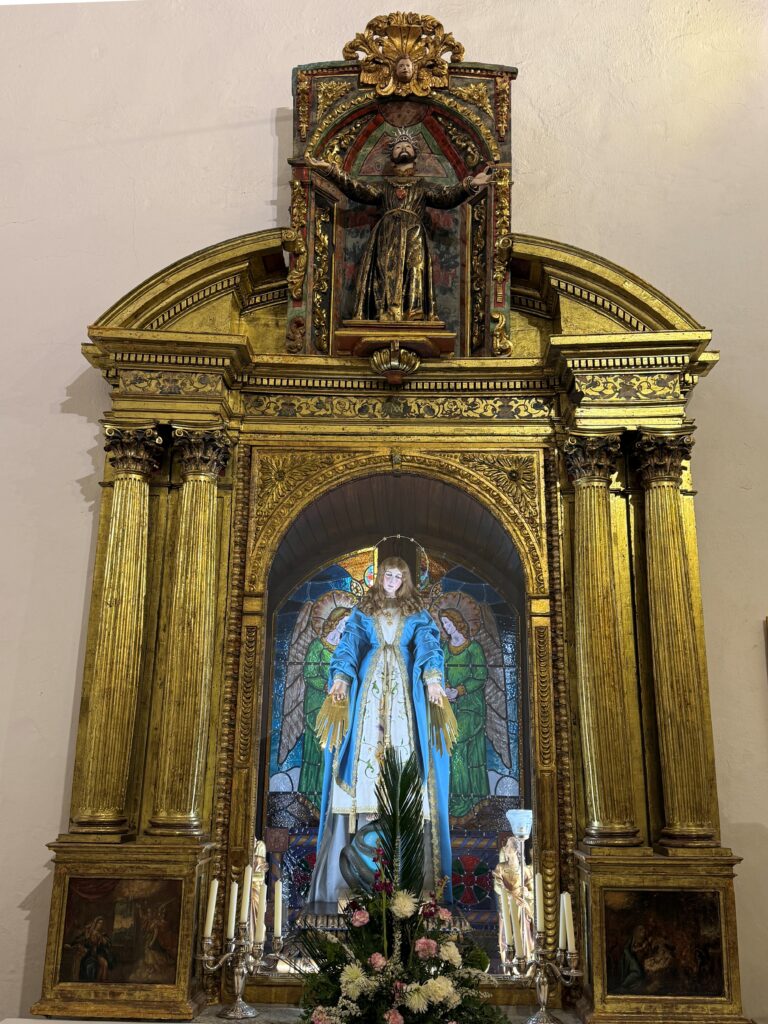
The altarpiece of the Virgin of Victories features a design similar to the Altarpiece of Jesus Nazarene. It is Mannerist, consisting of a single tier with an attic.[1] Inside it houses the image of «Our Lady of Victories», a work attributed to Mariano Bellver,[2] which replaced the Virgin of the Rosary that was previously in its place.
[1] Flor González Santos, Estudio sobre el estado de conservación de los bienes muebles de la iglesia de Santa María del Azogue en Puebla de Sanabria (Zamora), pag. 16
[2] Alejandra Hernández Clemente, Ricardo Bellver y Ramón, su obra escultórica: un estudio historiográfico y documental. Tesis Doctoral (Madrid 2012) Pag. 200
The devotion to the «Virgin of Victories» in the parish church of Our Lady of the Azogue was established in 1848, when a group of devout individuals, filled with hope, chose to honor the Most Holy and Immaculate Heart of Mary under the title of Our Lady of Victories, seeking the conversion of sinners.
[1] Julián Galende Furones, Apuntes para una historia, Fiesta de las Victorias 1848-1998. 150 Aniversario. (Puebla de Sanabria 1998) Librito conmemorativo. Pág. 10-11 (Archivo Parroquial)
Verses from the most well-known and widely sung novenas:
“Ya que llenáis de favores
a todo el que en Vos confía,
¡Oh Corazón de María,
socorred los pecadores!
Vida vive sin temores
el que dice cada día:
¡Oh Corazón de María,
socorred los pecadores!”[1]
[1] Novena al Santísimo e Inmaculado Corazón DE MARÍA instalada en la Puebla de Sanabria, bajo la advocación de Nuestra Sra. de las Victorias. Est. Tipográfico de San José, San Andrés, 40, Bajo (Zamora 1905) (Archivo Parroquial)
Since then, devotion to the Virgin under her title of «Victories» has grown to become the most significant festival in the town of Puebla de Sanabria.
The image is paraded on September 8, the liturgical feast of the Nativity of the Virgin Mary and the principal day of the festival, preceded by a solemn novena.
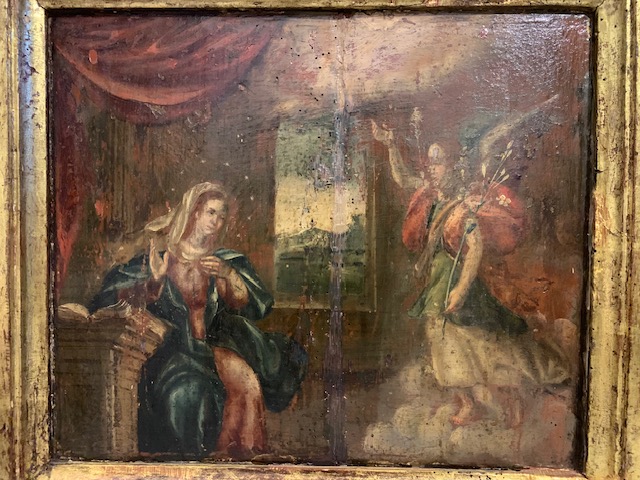
In the Gospel according to Saint Luke, this passage is illustrated: “In the sixth month, the angel Gabriel was sent by God to a town in Galilee called Nazareth, to a virgin betrothed to a man named Joseph, of the house of David; the virgin’s name was Mary. The angel entered her presence and said, ‘Rejoice, full of grace, the Lord is with you’” (Luke 1:26-28).
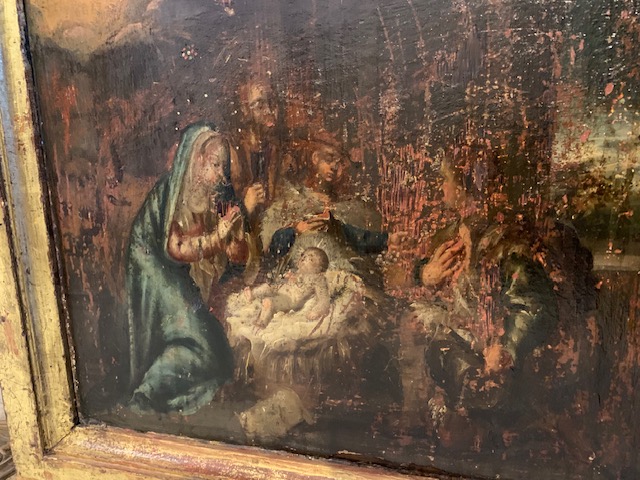
On the right, the Nativity of Jesus, as depicted by Saint Luke, is portrayed as follows:
“Also Joseph, being of the house and family of David, went up from the town of Nazareth in Galilee to the city of David, called Bethlehem, in Judea, to register with his wife Mary, who was expecting a child. While they were there, the time came for her to give birth, and she gave birth to her firstborn son, wrapped him in swaddling clothes and laid him in a manger, because there was no room for them in the inn.” (Luke 2:4-7)
The capitals are of composite origin and support an entablature with a frieze decorated with scrolls and foliage painted using a brush technique, a prominent cornice with a smooth moulding, and a checkerboard pattern. It features a semicircular broken pediment housing a Baroque niche richly adorned with vegetal decoration, with a cherub’s head at its centre. The interior of the niche is designed in three tiers, with a semi-spherical dome featuring side coffers carved in gilded wood, and the central coffer contains a painted panel ornately decorated with vases and floral motifs[1].
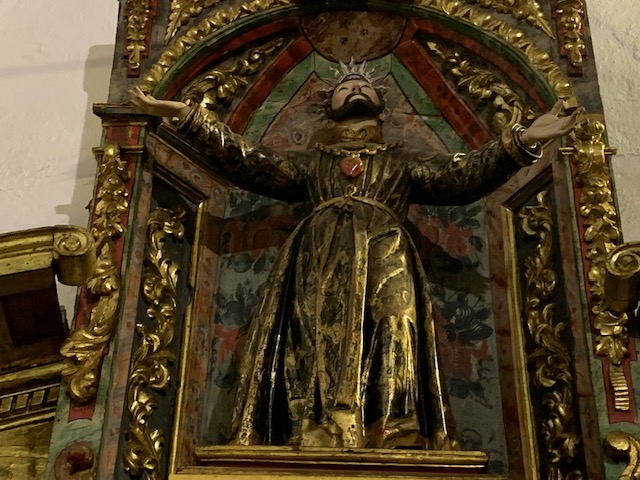
The niche houses the sculpture of Saint Cajetan, made of polychromed wood, in the round with finely polished flesh tones, and clothing decorated with gilded patterns. It rests on a pedestal that projects from the vertical plane, supported by a vegetal bracket.[1] Saint Cajetan was canonised on 12 April 1671, and his feast day is celebrated on 7 August.
[1] Ibid.
2.8 Altarpiece of the Immaculate Conception
Once again, we encounter a altered altarpiece. To grasp its original design, we must imagine relocating the painting of the Holy Christ of the Rexa, currently positioned on the right side of the nave, and placing it at the center of the niche.
In the parish factory book, numerous references to the altar titled the Most Holy Christ of the Rexa (Reja) place it in this location. The decoration of the altarpiece reveals its original dedication to the Passion of Christ, featuring intricate filigree that conceals symbols such as the crown of thorns, the three nails, the veil of Veronica, and a low relief depicting the burial of Jesus.
Masses were celebrated at this altar for the «relief of the Souls in Purgatory.»[1]
[1] 1 Puebla Libro de Fábrica, principia 1732 – 1790 termina. De la iglesia parroquial, Folios 232 al 233 (Archivo Diocesano de Astorga)
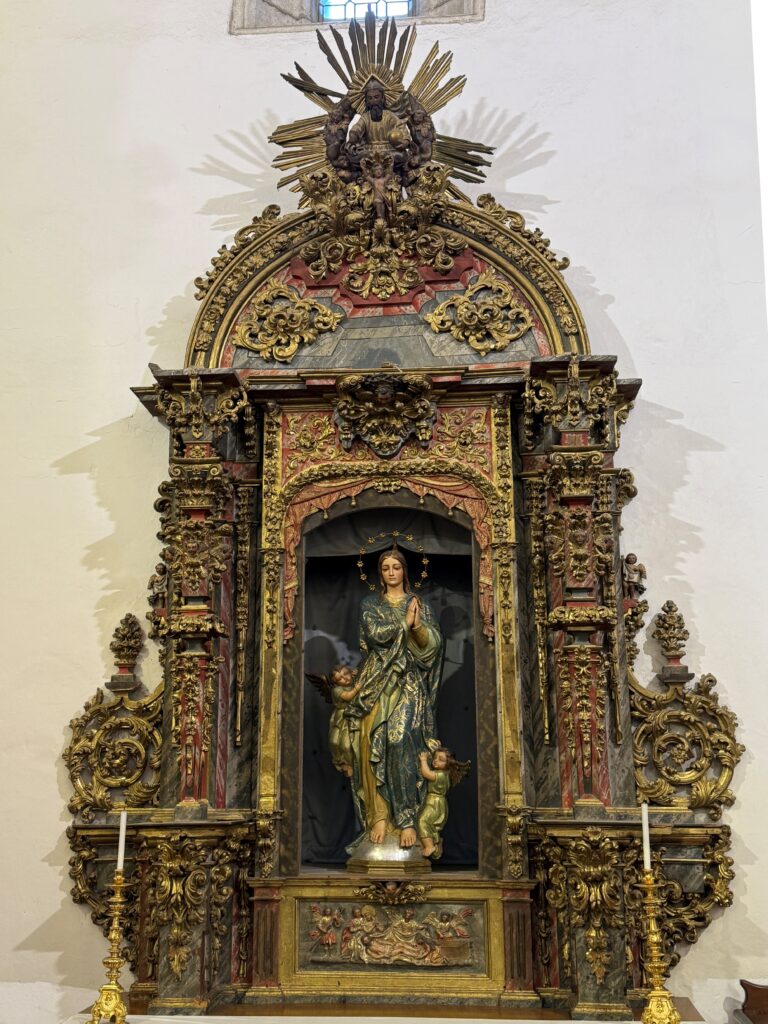
This altarpiece of the Immaculate Conception prominently features the Virgin Mary as its central figure.
This is an image of a polychromed mould, whose iconography resembles more the mystery of the Assumption of the Virgin Mary into Heaven than the Immaculate Conception. This is due to two reasons: first, the Virgin directs her gaze to the ground and not to the sky; second, the angels are ascending, carrying the Mother of God upwards in a position of elevation.
The altarpiece is in the Baroque style, made of polychromed wood. It consists of a main section, an attic, and a crowning element. In the central section, inside the niche, there is a plaster sculpture of the Immaculate Conception. The niche rests on a base featuring a low relief of the Burial of Christ, a segmental arch decorated with drapes, and a vegetal garland.
Flanking the central niche are the pilasters and the polychrome stipites made of reddish marble, decorated with gilded vegetal motifs and angel heads. These rest on a predella with prominent nets, decorated at the ends with vegetal volutes terminating in a floral ornament. The pediment is circular, adorned with vegetal decoration and marbling, topped with a vegetal finial. At the crowning is God the Father holding the orb of the world and powers[1].
[1] Ibid. Nota 42. Pág. 13
The Father gestures with His index finger toward the risen Son ascending to heaven, clad in a red robe. Angels encircle the scene, forming a circle of clouds. This elegant high relief beautifully captures the essence of the Holy Trinity: one God in three persons united by perfect Love. GOD IS LOVE. This divine love flows to us through His Son, Jesus Christ, and the Holy Spirit.
Continue with the interior tour.
The explanation focuses on four key areas: front right section, central section, front left section, and central nave.